Helping Dogs Feel Safer Alone: A Practical Guide

Some dogs show signs of distress before you leave; others become upset only after the door closes. Possible signs include persistent barking or howling, pacing, destructive behavior, and toileting indoors. A dog may also pant, drool, or repeatedly attempt to escape. A camera can help you see what happens during a short absence without guessing from the aftermath.
These behaviors do not automatically mean your dog has separation anxiety. Toileting can have a medical cause, for example, while barking may be a response to sounds outside. Your veterinarian can help assess possible medical and behavioral causes. The ASPCA’s guide to separation anxiety describes common signs and approaches to treatment.
Check the product’s listed specifications when evaluating recognizing distress around time alone.
Featured in this guide
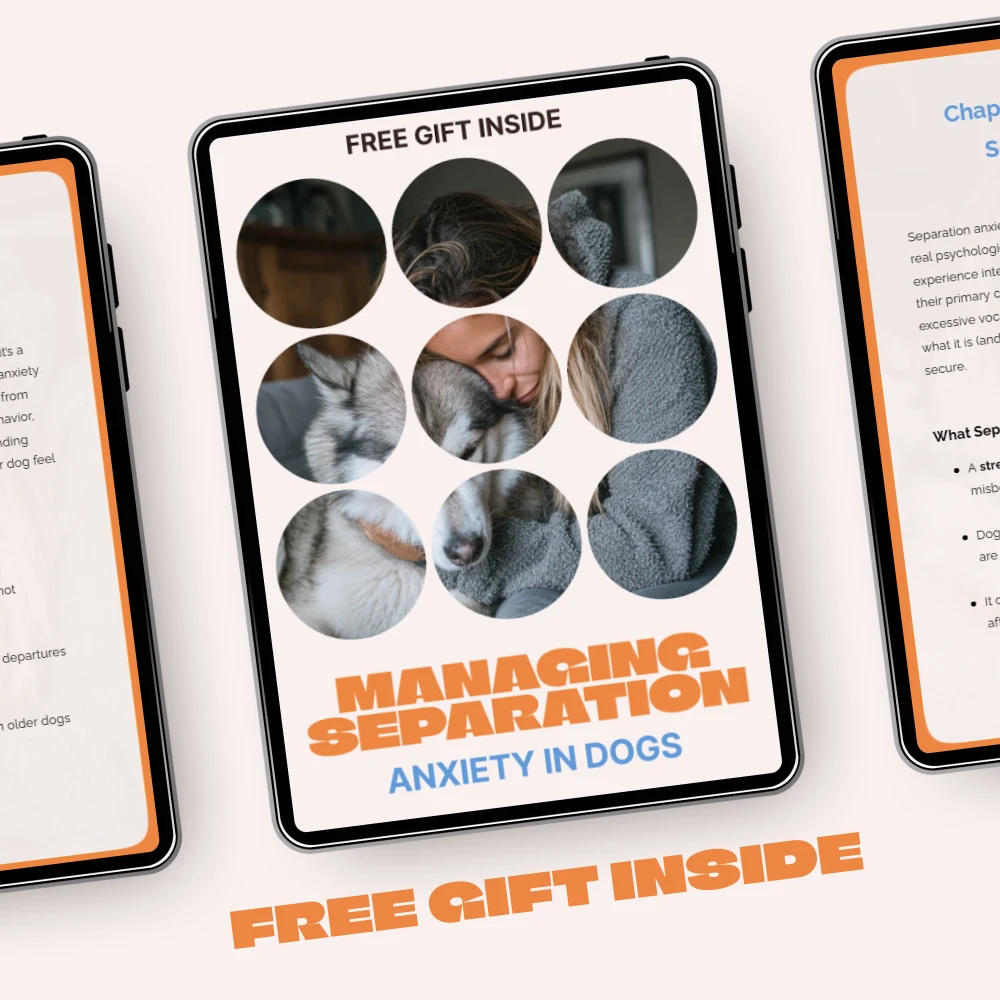
Managing Separation Anxiety in Dogs | Practical Training eBook for Calmer, Confident Dogs | Separation Anxiety in Dogs Guide
Notice when your dog becomes uncomfortable. Does picking up your bag prompt pacing, or does your dog settle until you leave? Record what happened, how long you were away, and what you observed. Look for patterns rather than judging a single difficult day.
Where possible, keep necessary absences within a duration your dog can tolerate while you work on training. A trusted person might stay with your dog, or you might take your dog along when practical.
Practice a separation short enough that your dog remains comfortable. For some dogs, that may mean stepping out briefly and returning before they become upset. Increase the duration gradually only while your dog continues to cope. If you notice stress, make the next session shorter or easier.
Our eBook can be a useful companion as you observe your dog, plan manageable practice, and keep track of changes.
Use a general guide alongside individualized advice, not as a replacement for a veterinary assessment or qualified behavior support. If an exercise is too difficult for your dog, adjust the plan with a professional rather than treating a schedule as a deadline.
If you use AI tools to organize your own training notes, our Creating with AI Without Copying Others guide is a separate resource on ethical writing. It is not a dog-training resource or a substitute for professional advice.
Contact your veterinarian if signs are severe, appear suddenly, or are getting worse. Seek prompt help if your dog risks injury, such as by repeatedly attempting to break through a door or enclosure. Your veterinarian can assess health concerns and discuss appropriate next steps.
If your dog becomes intensely distressed even during very brief separations, pause and seek professional guidance rather than pushing through. A qualified dog behavior professional can help tailor a plan to your dog’s triggers and your household’s needs. Bring your notes and any recordings to the appointment.
Check the product’s listed specifications when evaluating when to ask for help.
Before choosing, compare the product details with your daily routine, available space, care needs, and preferred setup. The strongest option is usually the one that fits the intended use clearly and remains simple to clean, store, and check before repeat use.
It is also worth checking measurements, material notes, included parts, and compatibility details so the item matches the way it will be used after delivery.
A mental health professional can assess separation anxiety disorder and recommend treatment, which may include therapy and sometimes medication. For a dog showing distress when left alone, consult a veterinarian or qualified behavior professional.
The 3-3-3 rule is a grounding exercise in which a person names three things they see, notices three sounds, and moves three parts of their body. It can help redirect attention in an anxious moment but does not replace treatment.
Adults may experience excessive fear or distress about separation from someone they are attached to, worry about harm or loss, and avoid being apart. A mental health professional can assess symptoms and their impact on daily life.
Yes, separation anxiety is common in babies around this age and is often part of typical development. If you are concerned about your baby’s distress or development, speak with their pediatrician.



Leave a comment