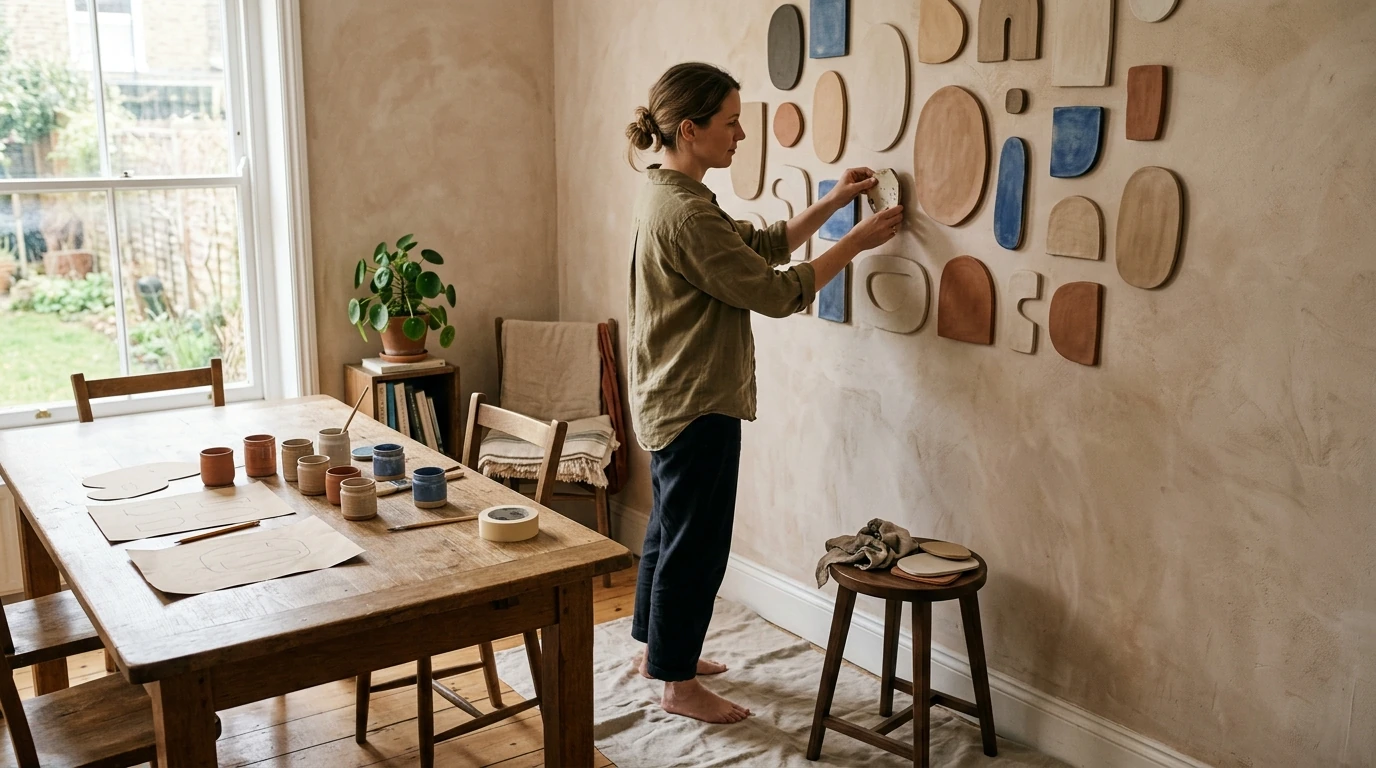
Hands That Create Walls That Speak: The Art of a More Personal Home
Mass-produced decor can be attractive, but handmade pieces have the potential to say something specific about the people who live with them. A framed letter may represent a loved one, pressed leaves can recall a memorable trip, and a painted canvas can reflect colors associated with a favorite season or place.
Start by choosing a personal theme before purchasing supplies. Botanical forms, travel memories, abstract shapes, handwritten words, and family keepsakes all provide a useful creative direction. Repeating two or three elements—such as a color, shape, or texture—will help simple materials look cohesive.
There is also no need to cover every available section of a wall. One strong focal piece above a console, desk, or sofa often feels more intentional than numerous unrelated decorations.
Personal Themes and Wall Art Directions
| Theme | Possible Materials | Best Setting | Overall Mood |
|---|---|---|---|
| Nature | Pressed leaves, paint, wood, handmade paper | Bedroom or sunroom | Calm and organic |
| Family memories | Photos, letters, fabric, shadow boxes | Hallway or living room | Warm and nostalgic |
| Abstract color | Canvas, acrylic paint, sponges, tape | Office or living area | Energetic and modern |
| Typography | Stencils, ink, quotes, reclaimed boards | Entryway or workspace | Expressive |
Botanical forms, travel memories, abstract shapes, handwritten words, and family keepsakes all offer a strong creative direction. Repeating two or three elements—perhaps a frame color, curved silhouette, or natural texture—helps modest materials feel unified.
| Theme | Materials | Ideal setting | Mood |
|---|---|---|---|
| Nature | Pressed leaves, paint, wood, handmade paper | Bedroom or sunroom | Calm and organic |
| Family memories | Photos, letters, fabric, shadow boxes | Hallway or living room | Warm and nostalgic |
| Abstract color | Canvas, acrylic paint, sponges, tape | Office or living area | Energetic and modern |
| Typography | Stencils, ink, quotes, reclaimed boards | Entryway or workspace | Expressive |
Featured in this guide
Hands That Create Walls That Speak – A Practical Ebook of DIY Wall Art Ideas for Meaningful, Stylish Home Decor
The Hands That Create Walls That Speak DIY wall art ebook is designed to help readers collect inspiration and turn it into a manageable creative plan. It may suit renters, homeowners, beginners, and anyone seeking a more personal alternative to ready-made decoration.
The digital format can be kept nearby while measuring a wall, comparing materials, or working at a craft table. Consult the product page for current file information, requirements, delivery details, and the latest description before purchasing.
Once the wall display is complete, a decorative object can extend its story into the room. The Creative Girl Resin Sculpture Glass Vase with LED Lights can serve as a sculptural accent on a shelf or console beneath the arrangement.
Measure the available width and height, noting furniture edges, vents, switches, and lighting. Cut paper templates to the proposed artwork dimensions and attach them temporarily with wall-safe tape. This low-commitment rehearsal reveals issues with height, spacing, and scale before installation.
Choose two or three recurring details, such as black frames, curved shapes, natural fibers, or muted blue accents. Preserve enough negative space for the artwork, furniture, and architecture to breathe.
Start with what is already available: leftover paint, fabric remnants, wrapping paper, cardboard, magazines, jars, and unused frames. Painted geometric panels, framed textiles, paper collages, pressed botanicals, and simple fiber hangings can all become refined displays.
A limited palette and repeated shape make inexpensive supplies appear deliberate. Spend selectively on visible finishing details such as a clean mat, sturdy backing, consistent frame color, or reliable hanging hardware.
Protect the work surface and follow manufacturer directions for adhesives, paints, sealants, and cutting tools. If a product may release fumes, provide appropriate ventilation.
Focus on one room and one defined problem, such as a narrow hallway or a blank wall above a desk. Choose a project according to the time, tools, and materials available—not appearance alone.
Photograph the proposed arrangement before installation to spot awkward gaps or scale problems. Confirm that every finish is dry, select hardware appropriate for the artwork’s weight and wall type, and use a level. Date or label meaningful pieces on the back so their stories remain connected to them.
Look for current adult programs at local museums, community colleges, recreation centers, independent studios, and craft stores. Compare schedules, instructor experience, materials fees, and beginner requirements before enrolling.
Art classes can be appropriate at nearly any age when activities, tools, and instruction match the participant’s developmental level. Check each provider’s stated age range and supervision policies.



Leave a comment