
When Does Separation Anxiety Peak in Babies?

Separation anxiety often begins around 6 to 8 months and can be strongest between about 10 and 18 months, though the timing varies from baby to baby. You may notice your baby becoming upset when you leave the room, reaching for you around unfamiliar people, or protesting when someone else tries to comfort them.
This response is a common part of development: your baby is learning that you still exist when you are out of sight but may not yet understand when you will return. For many children, separation anxiety gradually eases during the toddler years, although it can return during changes in routine, illness, or periods of tiredness.
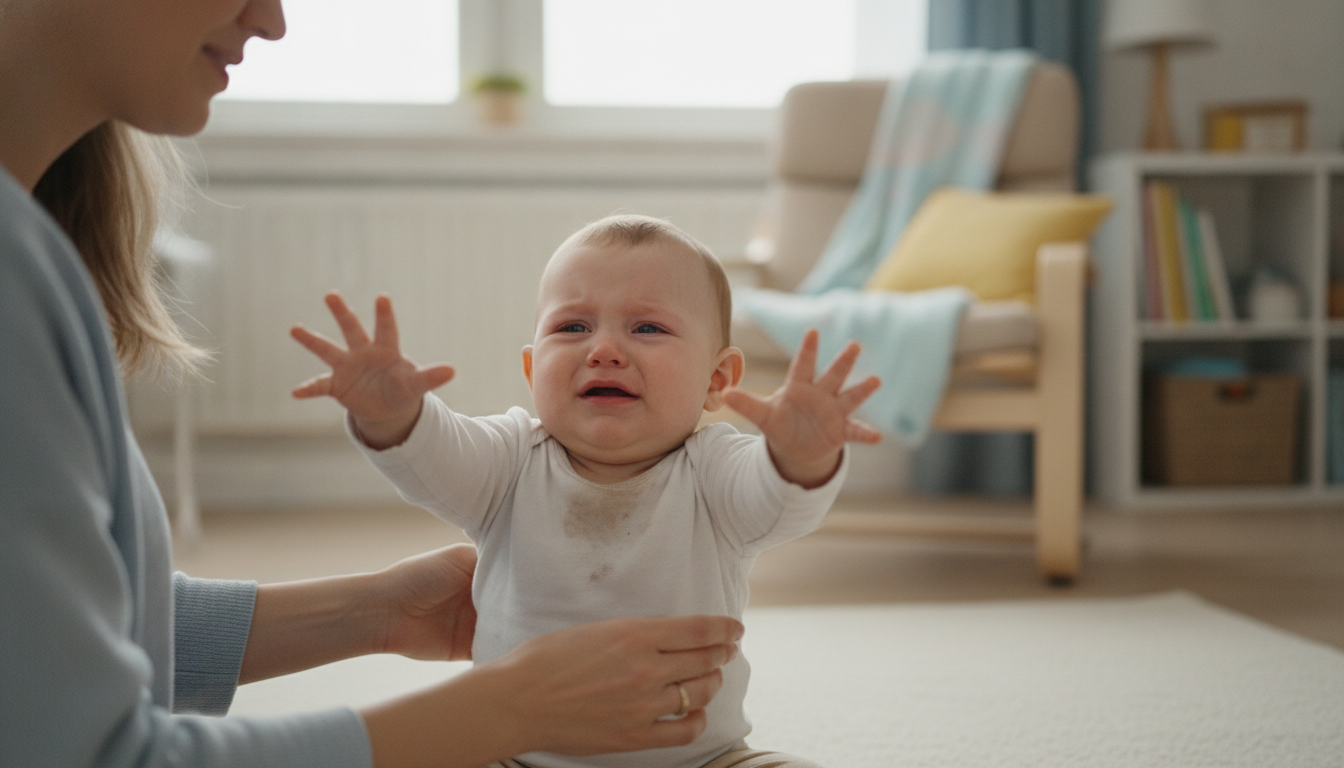
Around 8 months, your baby may cry when you put them down because they want the closeness and reassurance of being held, especially if they are tired, hungry, overstimulated, or in an unfamiliar setting. Crying at this age does not necessarily mean something is wrong, but it can be tiring when you need a moment to cook, work, or care for yourself.
Try placing your baby in a safe play space near you, talking to them as you move around, and starting with short periods on the floor while you stay close. If the crying is unusual for your baby, seems linked to pain, or comes with symptoms that concern you, contact your child’s pediatrician for guidance.
Featured in this guide
Managing Separation Anxiety in Dogs | Practical Training eBook for Calmer, Confident Dogs | Separation Anxiety in Dogs Guide
Practice brief separations when your baby is rested and with a familiar, trusted caregiver, then gradually build up to longer absences as they become more comfortable. Keep your goodbye warm and predictable, tell your baby that you are leaving, and avoid sneaking away, which can make departures harder to anticipate.
Simple routines such as a cuddle, a wave, and the same short goodbye phrase can help your baby recognize what happens next. When you return, offer comfort and connection; your baby may still cry at first, and that does not mean the practice has failed.
Check the product’s listed specifications when evaluating how to make goodbyes easier.
Every baby has a different temperament, so you can adjust your approach to their cues rather than expecting separation to become easy on a particular birthday. If distress is intense, persists as your child grows, or makes everyday care especially difficult, your pediatrician can help you consider what support may be useful.
Separation concerns can affect other members of your household, too, including pets; our Managing Separation Anxiety in Dogs guide is a practical training eBook focused on dogs. It addresses a different situation from infant development, so use your child’s pediatrician as your resource for questions about your baby.
The Crate Training Your Pup – A Practical Ebook Guide to Dog Crate Training Basics for Happy, Calm Dogs | Instant Digital Download works alongside the featured product; it creates an enclosed dog travel space away from loose cargo in the car.
You do not need to break a normal developmental response; instead, help your baby feel secure with predictable goodbyes and short separations with a trusted caregiver. Practice when your baby is rested, offer reassurance when you return, and build toward longer separations at a pace that works for your family.




Leave a comment